Apparel DTG and DTF
Garment teams track white ink handling, platen repeatability, pretreatment or transfer steps, wash expectations, and artwork approval speed.
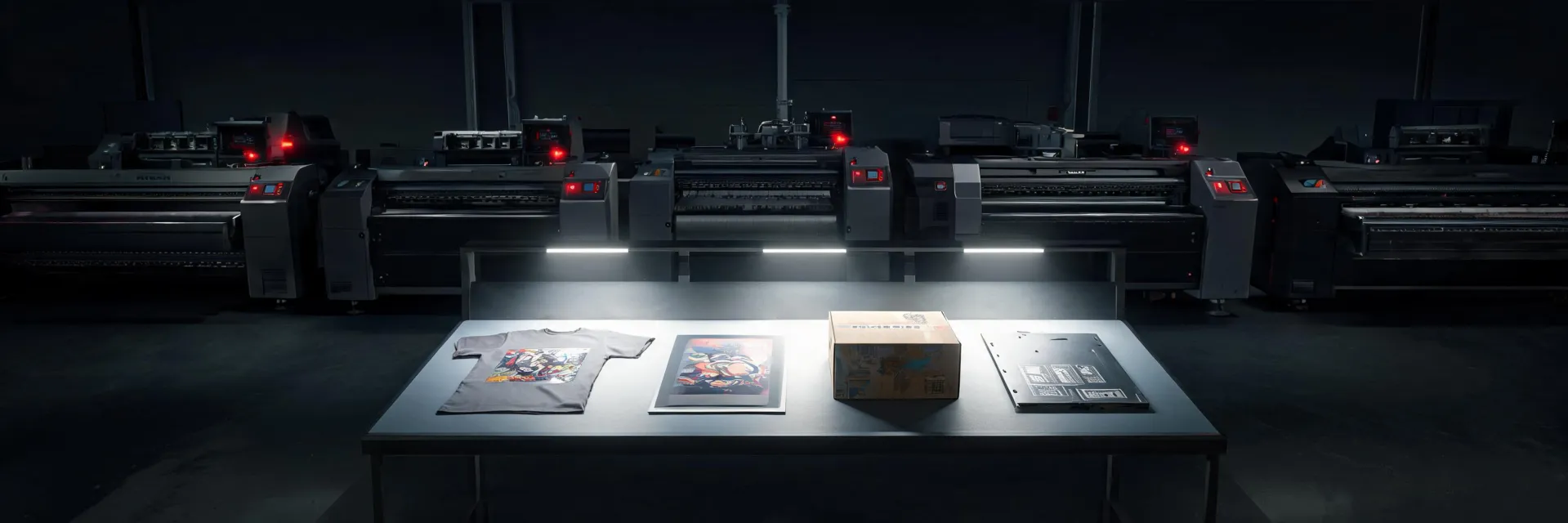
Different applications stress different parts of the workflow. Match the printer family to substrate behavior, color target, finishing step, and operator routine before comparing model names.
Garment teams track white ink handling, platen repeatability, pretreatment or transfer steps, wash expectations, and artwork approval speed.
Sign shops look for media width, color density, curing or drying behavior, contour-cut handoff, and reliable repeat work on promotional deadlines.
Packaging teams need short-run mockups, rigid substrate notes, surface adhesion checks, color proofing, and fast changes between concepts.
Industrial users ask about fixture control, legibility, part handling, surface preparation, and whether print output survives the next process step.
Transfer-heavy production compares roll handling, sublimation profile stability, heat-press capacity, and finished hand feel.
Promotional shops balance object variety, setup time, jigs, operator training, and UV curing behavior across many small batches.
The table keeps requirement language practical, so a buyer can collect useful answers before a demo or quote call.
Use it with actual sample materials, approved artwork, and finishing notes so the printer review reflects the work your operators run every week.
| Requirement | DTG / Apparel | UV / Rigid | Sublimation / Transfer |
|---|---|---|---|
| Substrate setup | Garment platen, pretreatment, fabric blend | Fixture, surface energy, object height | Roll media, transfer paper, heat press |
| Ink behavior | White ink opacity and maintenance rhythm | Adhesion, curing, primer choice | Profile stability and transfer release |
| Operator risk | Loading alignment and daily cleaning | Fixture repeatability and curing checks | Media feed, dryer, and press timing |
| Approval proof | Wash and hand-feel sample | Scratch, bend, or adhesion sample | Color target after transfer |
Share sample type, material, color target, and shift output so Ricoh can route the inquiry to the correct printer family.